
In the world of fitness, the debate between free weights and machines is ongoing and increasingly nuanced. Both types of equipment offer unique advantages, leading many to wonder which method is truly superior for improving strength and overall fitness. This article will delve into the intricacies of both approaches, guiding you in making an informed decision tailored to your personal goals.
Key Considerations
- Functionality: Free weights engage multiple muscle groups and promote functional fitness.
- Stability: Machines provide guided movement, which can enhance safety for beginners.
- Variety: Free weights offer an extensive range of exercises, while machines may target specific muscles.
As we analyze these factors, it’s crucial to understand their implications. Free weights such as dumbbells and barbells can foster a greater range of motion, allowing for a more natural body movement that is often required in everyday activities. For instance, exercises like the squat and deadlift not only build strength but also improve your coordination and balance, making them essential for overall physical functionality.
On the other hand, resistance machines can be particularly beneficial for those just starting on their fitness journey. By providing a fixed path of motion, machines help ensure that users maintain proper form, which can significantly reduce the risk of injury. For example, someone new to strength training may find it easier to perform a leg press using a machine than attempting to do a squat with free weights without proper guidance.
While free weights are celebrated for their versatility and ability to target multiple muscle groups, machines often shine in their specificity. For bodybuilders aiming to isolate a particular muscle, using a machine like the bicep curl can yield effective results. Additionally, machines can include features like variable resistance, allowing users to adjust their workouts according to their current strength levels or training phases.
Why This Matters
In an age where fitness trends are evolving, understanding the cost-benefit analysis of your workout tools is essential. Whether you’re a seasoned athlete or a gym novice, knowing the differences between free weights and machines can enhance your workout effectiveness. For example, integrating both methods within your regime could lead to optimal muscle growth and endurance.
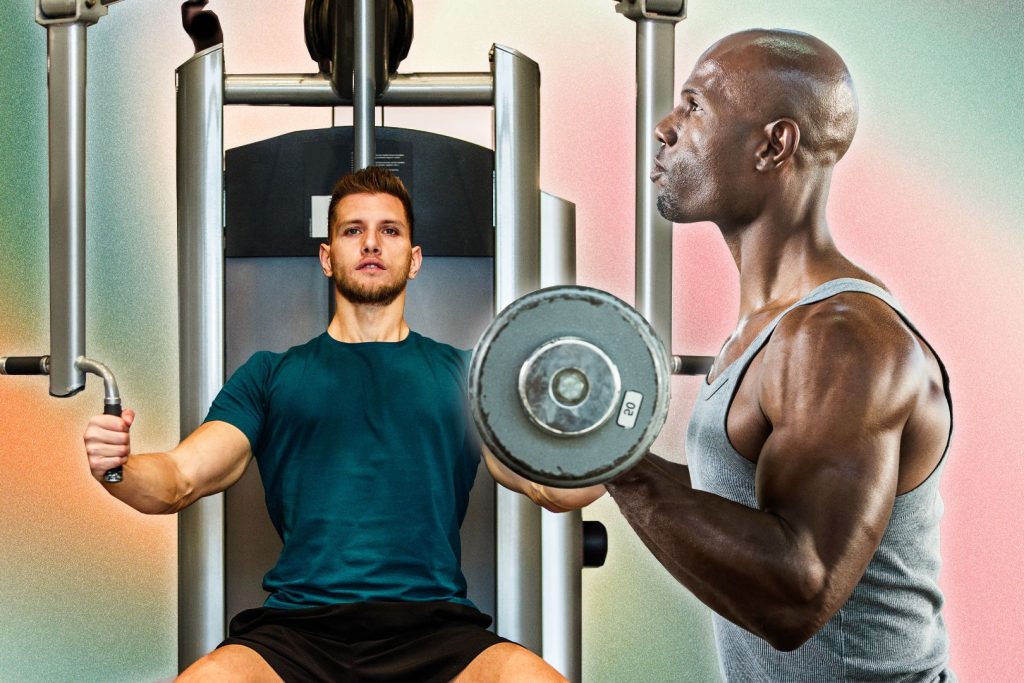
As you consider your fitness ambitions, think about what you want to achieve. Are you looking to build overall strength? Or perhaps improve your muscle definition for aesthetic purposes? Each approach has its strengths, and understanding these can guide you in tailoring a program that aligns with your individual goals.
Join us as we unfold the critical aspects behind these two training methods, guiding you to optimal results. Carrying insights from this exploration will enable you to make well-informed decisions as you navigate your fitness journey, ensuring you get the most mileage from your investment in health and well-being.
EXPLORE MORE: Click here for essential nutrition tips
Understanding the Core Differences
The ongoing debate between free weights and machines highlights essential differences that can affect workout results. Each category of equipment serves distinct purposes in strength training, and understanding these nuances can significantly enhance the effectiveness of your fitness journey.
Free weights, including dumbbells, kettlebells, and barbells, encourage the body to engage multiple muscles and stabilize during exercises. This is especially relevant for compound movements that recruit large muscle groups. For example, the deadlift not only targets the lower back, glutes, and hamstrings but also activates stabilizer muscles, which are vital for improved posture and overall strength. Engaging these stabilizer muscles can intrinsically lead to better athletic performance both in the gym and in sports.
Moreover, free weights allow for a broader range of exercises compared to machines. The versatility offered by free weights means you can adapt workouts to fit your unique body mechanics. Whether it’s performing a bench press at an angle that suits you or using unilateral movements to address muscle imbalances, free weights can cater to individual needs more effectively.
- Functional Movement: Free weights train your muscles in a way that mimics everyday activities.
- Increased Muscle Activation: Engaging multiple muscle groups simultaneously boosts caloric burn and muscle growth.
- Equipment Versatility: Ability to perform a wider variety of exercises and tailored routines.
On the flip side, machines provide a different approach to strength training, primarily focusing on controlled movements and isolation of specific muscles. This has notable advantages, particularly for beginners who require foundational strength without the added challenge of stabilizing during each lift. Machines like the lat pulldown and chest press guide the user through a fixed range of motion, which can help with muscle development through consistent form and technique. This is particularly advantageous for those recovering from an injury or those who may have concerns about their safety when first starting an exercise regimen.
Another aspect to consider is the notion of progression. Many machines come equipped with adjustable weights and settings tailored to different fitness levels. This can offer a clear path to monitor your progress without having to constantly reassess weight plate combinations as you do with free weights. The ease of switching between different resistance levels can help maintain motivation and ensure gradual, sustainable growth.
Impact on Strength Gains
Understanding these differences has tangible implications for your strength gains. A systematic analysis suggests that while both free weights and machines can lead to significant improvements in strength, free weights tend to offer enhanced overall functional fitness benefits. This might explain why many elite athletes favor free weights over machines for resistance training.
However, it’s crucial to note that the best choice often depends on individual goals, preferences, and fitness backgrounds. Factors like age, injury history, and workout experience play pivotal roles in determining which equipment might provide better results for you. By evaluating your personal situation against the characteristics of both free weights and machines, you can better align your training regimen with your overall fitness objectives.
Comparative Analysis of Free Weights vs. Machines: A Closer Look
When it comes to achieving fitness goals, understanding the differences between free weights and machines is crucial. Each method possesses unique features that cater to different training needs and preferences.
Free Weights: Versatility and Engagement
Using free weights, like dumbbells and barbells, encourages a greater range of motion. This equipment provides several advantages, allowing for more functional movements and strengthening supporting muscles. The use of stabilization muscles is significantly enhanced since the user must maintain balance, thereby fostering overall muscle coordination and functionality. Free weights also promote better muscle activation, which translates to greater strength gains over time. Moreover, free weights can be used anywhere, from home workouts to park sessions, providing an immense flexibility in training environments. This adaptability aligns seamlessly with various workout styles, such as powerlifting, bodybuilding, and functional training.
Machines: Safety and Ease of Use
Conversely, machines offer a structured way to perform strength training exercises. They are particularly advantageous for beginners or individuals with specific injury concerns, as machines often provide controlled movements that minimize the risk of injury. Users benefit from guided pathways, which can assist in maintaining proper form, a crucial factor for maximizing exercise efficiency. Additionally, the isolation of specific muscles when using machines allows for targeted training. In scenarios where you want to hone in on particular muscle groups, machines provide an effective means to do so, thus facilitating muscle growth and recovery.
Which is Right for You?
Choosing between free weights and machines ultimately comes down to personal fitness goals, preferences, and levels of experience. For those looking to develop strength holistically and improve functional fitness, free weights may be the better choice. Meanwhile, for beginners or those focusing on rehabilitation, gym machines can offer a safe and effective entry point into strength training.Understanding these nuances is vital as you embark on your fitness journey. To deepen your knowledge and explore the most effective use of these training tools, continue researching and experimenting in your workout regimens.
DISCOVER MORE: Click here to enhance your meal planning for optimal strength training
The Role of Personal Fitness Goals
As the discussion continues regarding free weights and machines, it becomes evident that personal fitness goals play a crucial role in determining which equipment is most effective for an individual. When contemplating whether to choose free weights or machines, it’s imperative to clearly define what you aim to achieve from your workout regimen.
If your goal is primarily to build functional strength and enhance athletic performance, free weights are generally the preferred choice. Exercises like squats and overhead presses utilize multiple joints and muscle groups, thereby replicating the biomechanics of various sports and daily activities. Research indicates that athletes who train with free weights often develop greater neuromuscular coordination, translating to better performance on the field or court. For example, a football lineman may benefit more from heavy barbell squats than from using a leg press machine, as the former actively engages stabilizer muscles crucial for explosive movements.
On the other hand, if your objectives lean towards muscle hypertrophy or bodybuilding, machines can have their advantages as well. Machines enable users to isolate muscles effectively, often leading to more targeted muscle growth. The controlled movements reduce the risk of injury, particularly beneficial for those just starting their fitness journey or those returning after an injury. Moreover, machines offer the ability to progressively overload specific muscles without the added complexity of balancing weights, enabling users to focus solely on lifting heavier. This precision can be advantageous for dedicated bodybuilders who are aiming to sculpt specific areas of their physique.
- Goal-Oriented Training: Defining your fitness goals significantly influences the equipment selection.
- Functional Strength vs. Muscle Isolation: Free weights may enhance functional strength, whereas machines are excellent for targeting individual muscles.
- Safety and Stability: Machines often provide a safer environment for beginners and those recovering from injuries.
Considerations for Workout Environment
Another influential factor in the free weights versus machines debate is the workout environment. The accessibility and availability of equipment can dictate your training approach. In many commercial gyms, both free weights and machines are readily available, providing the opportunity for a balanced workout routine. However, some gyms may be better equipped with one type of equipment over the other, encouraging users to favor what is more accessible.
For home gym enthusiasts, the available space and budget come into play significantly. Free weights like dumbbells and kettlebells are generally more cost-effective and require less space than a multi-station machine, making them a practical choice for home workouts. Alternatively, investing in a quality multi-gym machine can provide an all-in-one solution that caters to various exercises, albeit often at a higher price point. Ultimately, understanding how your environment can shape your workout options can help make the decision between free weights and machines easier.
It’s also important to recognize the social aspect of working out. Some users thrive in a communal environment where they can share techniques and encourage one another. In contrast, others prefer solitude and the autonomy of focusing solely on their movements, which might affect their choice of training equipment. Understanding what motivates you can assist in making an informed decision between free weights and machines.
DISCOVER MORE: Click here to learn how to tailor your diet for your training goals</p
Final Thoughts on Optimal Equipment Choices
In the ongoing exploration of free weights versus machines, it becomes clearly evident that there is no one-size-fits-all solution; the best equipment for your fitness journey largely hinges on your unique goals, experience level, and personal preferences. As outlined, free weights can foster better functional strength, enhancing overall athletic performance and engagement with stabilizer muscles—an essential aspect for anyone aiming to excel in sports or improve daily life functionality. Conversely, machines offer a safe and focused approach, empowering users to isolate muscles, reduce injury risks, and achieve targeted hypertrophy, appealing especially to bodybuilders or fitness novices.
Furthermore, personal fitness environments play a significant role in choosing between these two options. While commercial gyms often provide access to both modalities, home gym setups may dictate more practical choices based on space and budget. Understanding these dynamics enables one to tailor a workout routine that fits both lifestyle and fitness goals.
Ultimately, a well-rounded fitness regimen might incorporate both free weights and machines, leveraging their unique benefits to maximize results and maintain interest in the workout process. For those pondering the choice, it’s essential to remain open-minded and adaptable. Experimenting with both forms of training can reveal insights into what feels best for your body, making your journey towards fitness not just effective, but also enjoyable.

Beatriz Johnson is a seasoned fitness specialist and writer with a passion for simplifying the complexities of strength training and gym workouts. With over a decade of experience in the fitness industry, she specializes in topics like weight training techniques, workout programming, and exercise science principles. Through her work, Beatriz empowers readers to make informed fitness decisions, build sustainable training habits, and stay ahead in their journey toward stronger, healthier bodies.